Furnace Emergency? Immediate Steps and Emergency Repair in Kansas City
A furnace emergency is any sudden heating system failure or dangerous condition that threatens people or property and needs action right away. Acting quickly protects your family from carbon monoxide, gas leaks, electrical hazards, and frozen pipes that can cause costly water damage. This guide walks you through how to spot real furnace emergencies, the immediate safety steps to take, and the simple, safe checks you can try before calling a pro. You’ll also learn when to call an emergency HVAC service, how routine maintenance lowers future risk, and answers to common emergency questions. We use local examples for the Kansas City Metro and clear checklists so you can decide when to act now and when to wait for a technician. Read on for practical, easy-to-follow advice to protect your home and restore heat.
How to Identify a True Furnace Emergency
A true furnace emergency means there is an immediate risk to health or property — for example, a gas leak, a carbon monoxide alarm, visible smoke, or a total loss of heat during dangerously cold weather. These signs point to combustion, fuel, or electrical failures that can quickly become life-threatening or cause freeze damage to pipes and structure. Spotting these warning signs early helps you prioritize evacuation, emergency calls, and safe shutoff steps while avoiding attempts that could make things worse. Below are the most common emergency indicators and why each one needs prompt attention.
Common signs that point to a furnace emergency include:
- A strong, persistent smell of natural gas (a rotten-egg scent) inside the home.
- A carbon monoxide (CO) alarm sounding or people feeling dizzy, nauseous, confused, or unwell.
- No heat during an extended cold snap that puts pipes or people at risk.
- Loud banging, grinding, or mechanical noises paired with burning or electrical smells.
- Visible smoke, flames, or soot around the furnace area.
These signs separate urgent dangers from minor issues like a mis-set thermostat. If you see any of them, treat the situation as an emergency and follow the safety steps below.
What a Furnace in Emergency Mode Usually Looks Like
When a furnace is in emergency mode you’ll often notice both sensory warning signs and loss of function: strange smells, alarms, or the system failing to run. A gas leak usually smells like sulfur or rotten eggs (a scent added by utilities). Combustion problems can produce smoke, soot, or odd flame colors at the burner. Carbon monoxide is detected by a CO alarm or by symptoms that improve when you leave the house. Mechanical failures often sound like bangs or metal grinding and may indicate damaged heat exchangers, burners, or the blower motor. Spotting these combinations helps you decide quickly whether to evacuate, open windows, and call emergency services or a licensed technician.
When to Treat a Furnace Problem as an Emergency
Treat a furnace issue as an emergency if anyone feels sick, if you see combustion or gas-safety warning signs, or if losing heat threatens household safety or property. In freezing temperatures, a complete heating failure becomes urgent because of frozen or burst pipes. Persistent gas odors or a CO alarm are immediate red flags — evacuate and call professionals instead of trying home fixes. Even one warning sign, such as a burning smell with loud noises, should be treated as urgent until a qualified HVAC technician inspects the system. Those thresholds set up the immediate safety steps below.
Immediate Safety Steps to Take During a Furnace Emergency
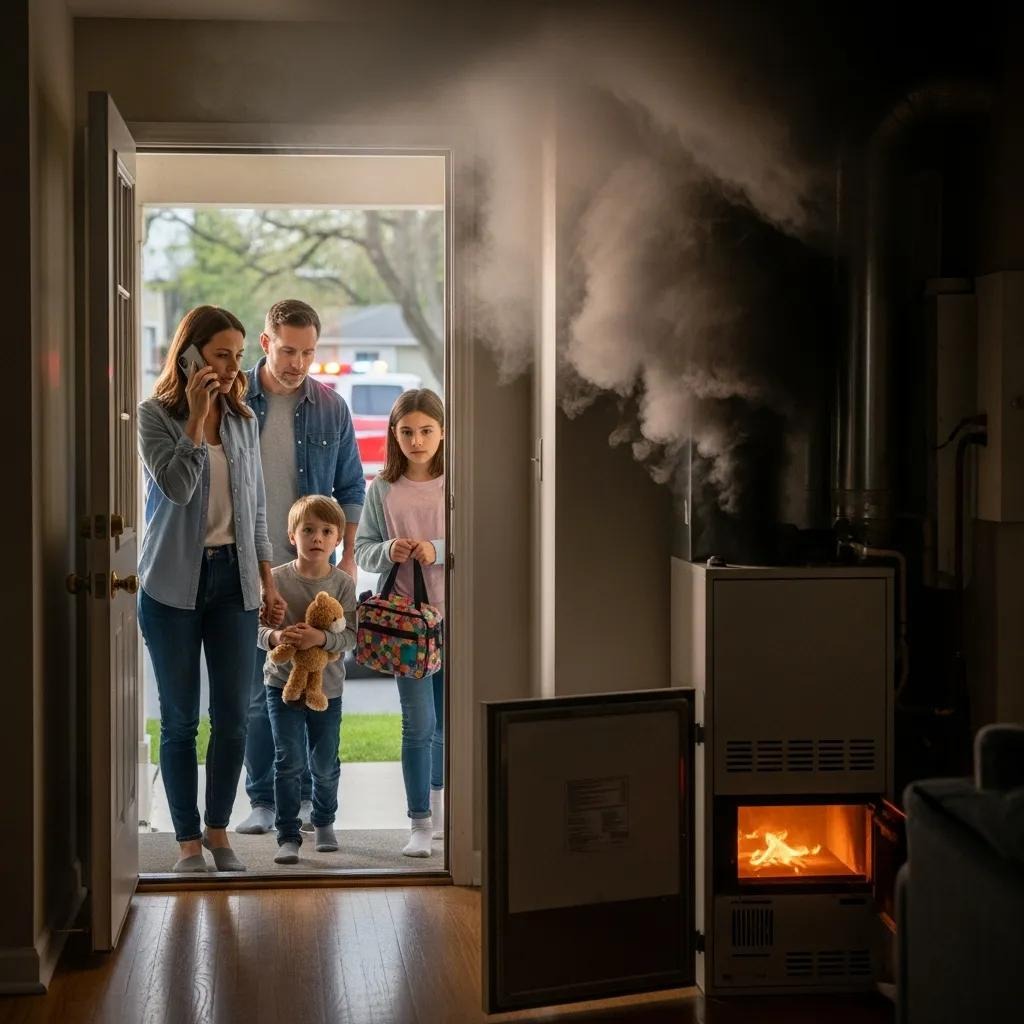
Protect people first, then reduce ignition risks and notify authorities. If you smell gas or a CO alarm sounds, evacuate immediately, avoid using switches or phones inside the home, and call for help from a safe spot outside. For problems that don’t involve gas or CO, consider shutting power to the furnace and ventilating the area while keeping everyone away from the unit. Follow the ordered steps below for most urgent furnace events.
- Evacuate everyone from the building right away if you smell gas, see smoke, or a carbon monoxide alarm is sounding.
- From a safe location outside, call emergency services (911) and your gas utility to report a suspected leak or combustion issue.
- Do not operate electrical switches, appliances, or phones inside the building if you suspect a gas leak — avoid creating any spark.
- If it’s safe and you’re trained, shut off the furnace gas valve and turn off main power at the breaker; if not, wait for emergency personnel or a qualified technician.
- Keep neighbors and pets away and do not go back inside until emergency responders or the gas company say it’s safe.
Taking these steps stops the situation from getting worse, preserves safety for technicians, and protects your household. After you’ve evacuated and called for help, you can perform safe basic checks only if it’s clearly safe to do so — we cover those next. If you needed to evacuate or call emergency services, contact a Emergency furnace repair service right away for on-site help.
Patriot Heating & AC offers around-the-clock emergency furnace response across the Kansas City Metro, including Shawnee, Olathe, and Lee's Summit, and can be reached right away for urgent on-site assessment and repair once safety steps are complete.
How to Respond to a Gas Furnace Leak
If you suspect a gas leak, evacuate immediately and contact emergency responders and the gas utility from a safe distance. Do not try to repair anything or use electrical devices inside the house. Once outside, call 911 and your gas company; utility crews and firefighters will check for gas, shut off supply if needed, and ventilate the home. Only return when professionals confirm it’s safe. If you’re trained and the shutoff valve is accessible at the meter, the gas company may instruct you to turn it off — but only do that after evacuating and following their guidance. These steps prevent explosions and serious injury and let technicians repair the furnace safely.
Key Safety Steps for Carbon Monoxide and Electrical Problems
If a carbon monoxide alarm sounds or people feel symptoms like dizziness or nausea, get everyone outside and call emergency services. CO is odorless and can be deadly — fresh air and medical attention are first priorities. For electrical hazards (smoke, sparking, burning smells), switch off power at the breaker if it’s safe and stay away from water near electrical parts. Don’t try to reset or run the furnace after an electrical fault without a professional inspection; hidden wiring or control board damage can start a fire. These precautions keep people safe and let responders and HVAC techs fix the issue correctly.
Safe Basic Troubleshooting You Can Do Before Calling a Pro
When there’s no gas smell or CO alarm, a few safe checks can rule out common causes of lost heat. Start with the thermostat, air filter, and electrical supply — these often explain why a furnace won’t run. Never open combustion chambers, attempt gas repairs, or work on wiring beyond resetting a clearly tripped breaker. The quick checklist and EAV table below list homeowner-safe checks you can do to gather useful info before you call an HVAC technician.
Quick DIY checklist to try before calling an emergency service:
- Thermostat: Make sure it’s set to Heat and the set temperature is higher than the room temperature; replace batteries if needed.
- Air filter: Check and replace dirty or clogged filters — restricted airflow often causes performance problems.
- Circuit breaker: Look for a tripped furnace breaker and reset it; some units also have a visible reset button.
- Pilot light / ignition: On older gas furnaces, visually confirm the pilot light is lit (follow your manual) and don’t mess with gas parts if unsure.
- Blower and vents: Ensure supply vents are open and nothing is blocking airflow, which can overwork the system.
These simple steps fix many “no heat” calls caused by a mis-set thermostat or a clogged filter and help techs diagnose harder problems faster if you need emergency service.
Quick diagnostic table: the table below shows safe checks homeowners can run to give technicians helpful information during dispatch.
Use once per manufacturer instructions; multiple resets → stop and call a pro
If these checks don’t restore operation or if you ever saw gas/CO signs, schedule emergency service right away; Patriot Heating & AC offers Emergency furnace repair and can dispatch trained technicians for on-site diagnosis and repair.
How to Check and Adjust Your Thermostat and Air Filter
First, confirm the thermostat is set to Heat and the set temperature is higher than the room. Replace batteries if the display is blank or acting oddly. For programmable or smart thermostats, check schedules and any temporary overrides. At the return grille, hold the air filter up to the light — if light doesn’t pass through or the filter looks dark, replace it with the right size and recommended MERV rating. Dirty filters reduce airflow, make the blower work harder, and can trigger safety limits that shut the furnace down. These checks are quick and safe; if the problem continues, note what you found and call emergency service if the home stays dangerously cold.
How to Inspect the Pilot Light, Circuit Breaker, and Reset Button
If your furnace has a visible pilot light, look at the flame through the access panel: a healthy pilot is a steady blue. A weak or yellow flame points to combustion issues that need a professional. Before touching electrical parts, turn off furnace power at the switch to avoid injury; then check and reset any tripped breakers. Find the manufacturer’s reset button (often a red button near the blower) and press it only once per the manual — repeated resets usually mean a bigger problem. Don’t tamper with gas valves or internal wiring; when in doubt, record what you saw and call an emergency HVAC technician for a safe diagnosis.
When and Why to Call Patriot Heating & AC for Emergency Furnace Repair
Call a professional when danger signs, ongoing failures, or complex mechanical or combustion issues are present. Patriot Heating & AC provides local, Emergency furnace repair across the Kansas City Metro to handle these situations. You should get professional help for confirmed gas leaks, carbon monoxide events, visible combustion problems, suspected heat exchanger damage, major electrical faults, or mechanical failures like a seized blower. Our emergency workflow prioritizes safety: we dispatch trained technicians, perform on-site diagnostics and safety checks, secure the property with temporary measures if needed, and give a clear plan for repair or replacement plus follow-up maintenance. When you see pro-level warning signs, calling an experienced Emergency provider brings safety, speed, and documented next steps.
Key situations that should prompt an immediate call to an emergency HVAC service include:
- Any confirmed gas leak or a persistent gas smell inside the home.
- Carbon monoxide alarm activation, occupant symptoms, or suspected CO exposure.
- Total loss of heat during dangerously cold conditions that risk frozen pipes.
- Visible smoke, burning smells, or odd flame behavior at the furnace.
- Repeated breaker trips, sparking, or loud mechanical failure noises.
Those decision points make it clear when DIY stops and professional emergency response begins. Patriot Heating & AC serves the Kansas City Metro with Emergency furnace repair and can be contacted to schedule urgent on-site service and follow-up solutions.
What Types of Furnace Emergencies Need a Professional Repair
Call a pro for gas hazards, combustion system failures, heat exchanger damage, electrical faults, and major mechanical breakdowns you can’t safely fix. Gas-related emergencies include leaks, faulty valves, or unstable burners — all carry explosion and CO risks. A cracked heat exchanger can let combustion gases into your home and requires immediate replacement by qualified technicians. Electrical faults like shorted control boards, repeated breaker trips, or burning insulation need licensed HVAC and electrical work. These categories show why fast expert assessment matters to protect people and restore safe operation.
How Preventative Maintenance Helps Avoid Future Furnace Emergencies
Regular preventative maintenance catches wear, combustion inefficiencies, and electrical risks before they become hazards. Annual tune-ups clean burners and combustion chambers, inspect heat exchangers, tighten electrical connections, and verify safety controls — all of which improve efficiency, lower operating costs, and cut unplanned breakdowns. Routine filter changes, blower inspections, and seasonal checks reduce strain on parts that fail most often during cold weather. The table below shows common maintenance items and the benefits homeowners get from regular service or a membership plan.
Maintenance summary: the table highlights what each service component does and how it lowers emergency risk while improving system performance.
Priority scheduling, discounts, routine checks — fewer emergencies
Regular maintenance reduces emergency calls and extends system life, making it a cost-effective strategy for homeowners in cold climates like the Kansas City Metro.
Benefits of Annual Tune-Ups and HVAC Maintenance Plans
Annual tune-ups and maintenance plans deliver clear benefits: better efficiency, early detection of failing parts, fewer emergency calls, and longer equipment life. Technicians clean and calibrate controls, inspect burners and heat exchangers, check safety switches, and verify wiring — steps that stop small problems from turning into big ones during cold weather. For homeowners, that means lower energy bills, fewer surprises, and a heating system you can rely on when you need it most. Documented maintenance also helps prioritize safety upgrades and planned replacements so you don’t face sudden failures.
How Joining the Patriot Heating & AC VIP Club Protects Your Furnace
Joining a VIP Club or maintenance plan gives you a proactive defense against furnace emergencies: scheduled inspections, priority service during busy periods, and discounts on parts and repairs. Members get seasonal tune-ups, filter reminders, and faster dispatch when problems arise — which matters most during winter cold snaps. These perks reduce the chance that small wear becomes an emergency and help lower unexpected repair costs. For homeowners who want organized, preventative care, Patriot Heating & AC’s VIP options support long-term system health and fewer emergency calls.
What to Do If Your Furnace Stops Working Suddenly
Start with safe, low-risk checks: confirm thermostat settings, replace a clogged air filter, verify the breaker hasn’t tripped, and perform a single manufacturer-approved reset if your unit has one. If the house is getting dangerously cold or pipes may freeze, use a safe temporary heater and call emergency HVAC service immediately. Don’t open combustion panels, tamper with gas valves, or work on wiring yourself. Keep notes of what you checked to help the technician diagnose and fix the problem faster.
Final Thoughts
Knowing how to react to a furnace emergency can keep your family and home safe. Recognize the warning signs, act quickly, and call professionals when needed. For ongoing peace of mind, schedule regular maintenance with a trusted HVAC provider. Contact Patriot Heating & AC today to learn about our emergency services and maintenance plans tailored for homeowners in the Kansas City area.
Need Help? Call Patriot.
Call Us At: (913) 214-0883
Discover why so many homeowners trust Patriot Heating & AC with ALL of their Home Heating needs!
Customer Testimonials
See why customers trust our licensed and background-checked technicians and the quality service we deliver every time.


We’ve used Patriot for several years now and they always provide exceptional service. In particular, their technician, Gabe Simmons, is wonderful to work with. He has been the technician for our home for a few years now and always does a fantastic job. He’s friendly, welcoming, and remembers specifics about our home. I can’t recommend him enough.
Alex C.
I love the way Patriot is organized, and gives you updates as to when your technician will arrive. Cody was just a couple of minutes past the appointment time, and apologized for it. He was professional, courteous, and shared some great information about my furnace and air conditioner. I really like the way that Patriot gives you a printed maintenance checklist; what a great idea !
Ellen M.
We’ve had work done from Mike at Patriot a few different times and everything has been great. From replacing the entire HVAC system to tune ups, Mike has been extremely punctual, helpful, efficient, and friendly. We really appreciate his work and courteous manner with a house full of young kids. We will always call Patriot with our home needs as pricing, work, and staff have been superb. Thank you!
Matt S.
Mike did an excellent job working in my furnace and AC units to make sure they are running at peak performance. I am very pleased with Patriot and all they do for our families comfort. Justin came back out to replace the fan motor in the air conditioning unit on warranty. Thanks to both Mike and Justin for the excellent service.
Scott K.
Great service. Cody, the technician, is always polite, on time,, and always put plastic wraps on shoes before coming inside the house. I showed him today that my thermostat is off (according to my other 2 thermometers I put side by side). He called the company and they gave me the new one even it is after 3 years since I purchased the new system with them. Very honest company. Thank you.
v. s.
Look no further than Patriot Heating & AC for your service needs. I have used their services for the past 4 years now and have been completely satisfied. I have found them to be honest and professional as well as highly experienced. Frank was our technician today and he demonstrated all the values I have come to expect from Patriot Heating & Air. My expectations are "Perfection is the Standard". Patriot meets those expectations.
Dane R.
We’ve used Patriot for several years now and they always provide exceptional service. In particular, their technician, Gabe Simmons, is wonderful to work with. He has been the technician for our home for a few years now and always does a fantastic job. He’s friendly, welcoming, and remembers specifics about our home. I can’t recommend him enough.
Alex C.
I love the way Patriot is organized, and gives you updates as to when your technician will arrive. Cody was just a couple of minutes past the appointment time, and apologized for it. He was professional, courteous, and shared some great information about my furnace and air conditioner. I really like the way that Patriot gives you a printed maintenance checklist; what a great idea !
Ellen M.
We’ve had work done from Mike at Patriot a few different times and everything has been great. From replacing the entire HVAC system to tune ups, Mike has been extremely punctual, helpful, efficient, and friendly. We really appreciate his work and courteous manner with a house full of young kids. We will always call Patriot with our home needs as pricing, work, and staff have been superb. Thank you!
Matt S.
Mike did an excellent job working in my furnace and AC units to make sure they are running at peak performance. I am very pleased with Patriot and all they do for our families comfort. Justin came back out to replace the fan motor in the air conditioning unit on warranty. Thanks to both Mike and Justin for the excellent service.
Scott K.
Great service. Cody, the technician, is always polite, on time,, and always put plastic wraps on shoes before coming inside the house. I showed him today that my thermostat is off (according to my other 2 thermometers I put side by side). He called the company and they gave me the new one even it is after 3 years since I purchased the new system with them. Very honest company. Thank you.
v. s.
Look no further than Patriot Heating & AC for your service needs. I have used their services for the past 4 years now and have been completely satisfied. I have found them to be honest and professional as well as highly experienced. Frank was our technician today and he demonstrated all the values I have come to expect from Patriot Heating & Air. My expectations are "Perfection is the Standard". Patriot meets those expectations.
Dane R.
Customer Testimonials
See why customers trust our licensed and background-checked technicians and the quality service we deliver every time.
We’ve used Patriot for several years now and they always provide exceptional service. In particular, their technician, Gabe Simmons, is wonderful to work with. He has been the technician for our home for a few years now and always does a fantastic job. He’s friendly, welcoming, and remembers specifics about our home. I can’t recommend him enough.
Alex C.
I love the way Patriot is organized, and gives you updates as to when your technician will arrive. Cody was just a couple of minutes past the appointment time, and apologized for it. He was professional, courteous, and shared some great information about my furnace and air conditioner. I really like the way that Patriot gives you a printed maintenance checklist; what a great idea !
Ellen M.
We’ve had work done from Mike at Patriot a few different times and everything has been great. From replacing the entire HVAC system to tune ups, Mike has been extremely punctual, helpful, efficient, and friendly. We really appreciate his work and courteous manner with a house full of young kids. We will always call Patriot with our home needs as pricing, work, and staff have been superb. Thank you!
Matt S.
Mike did an excellent job working in my furnace and AC units to make sure they are running at peak performance. I am very pleased with Patriot and all they do for our families comfort. Justin came back out to replace the fan motor in the air conditioning unit on warranty. Thanks to both Mike and Justin for the excellent service.
Scott K.
Great service. Cody, the technician, is always polite, on time,, and always put plastic wraps on shoes before coming inside the house. I showed him today that my thermostat is off (according to my other 2 thermometers I put side by side). He called the company and they gave me the new one even it is after 3 years since I purchased the new system with them. Very honest company. Thank you.
v. s.
Look no further than Patriot Heating & AC for your service needs. I have used their services for the past 4 years now and have been completely satisfied. I have found them to be honest and professional as well as highly experienced. Frank was our technician today and he demonstrated all the values I have come to expect from Patriot Heating & Air. My expectations are "Perfection is the Standard". Patriot meets those expectations.
Dane R.